Understanding Why Specialty Coffee Prices Change
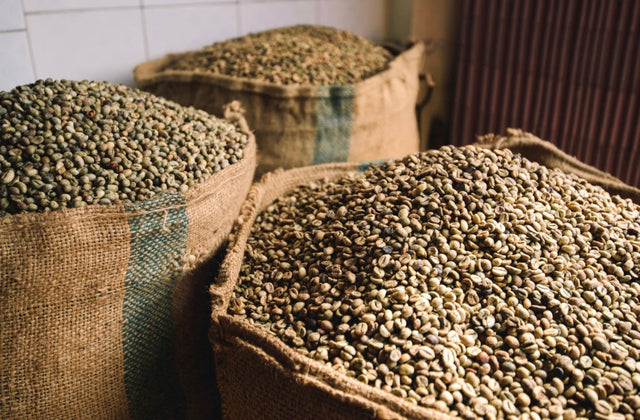
If you've noticed the price of coffee changing over recent years, you're not imagining it. The cost of green coffee, the unroasted beans we buy before roasting them here in Wiltshire, can move considerably over time.
Coffee is an agricultural product grown thousands of miles from the UK, so its price is influenced by everything from weather and harvest size to global demand, exchange rates and transport costs.
For an independent specialty coffee roaster like us, understanding those changes is an important part of continuing to source great coffee without compromising on quality.

Why Are Coffee Prices Changing?
There isn't one single reason. The price we ultimately pay for green coffee is influenced by several interconnected factors.
1. Weather, Climate and Harvests
Coffee is particularly sensitive to growing conditions.
Brazil, the world's largest producer of Arabica coffee, can have a significant influence on global supply. Drought, excessive rainfall, frost or unusually high temperatures can all affect the size and quality of a harvest.
Weather challenges in other producing countries can have similar effects. When less coffee is available while global demand remains strong, prices can rise.
For specialty coffee, availability can be even more limited because we're looking for coffees that meet particular standards for quality, flavour and traceability rather than simply buying whatever coffee is cheapest.

2. Global Coffee Markets
Arabica coffee is traded internationally, and movements in the global commodity coffee market can influence prices throughout the supply chain.
However, specialty coffee isn't quite as simple as looking at one market price.
High-quality coffees can command premiums based on factors such as cup quality, origin, variety, processing method, availability and the relationships involved in sourcing them. Exceptional microlots and particularly sought-after coffees can sit well above commodity market prices.
That means two coffees grown in the same country, or even the same region, can have very different values.
3. Transport and Supply Chains
Before a coffee reaches our roastery, it has already been on quite a journey.
Coffee must be processed at origin, prepared for export, transported internationally, imported into the UK and stored before it ever reaches our roaster.
Shipping costs, fuel prices, port disruption, insurance and other logistical costs can therefore influence the final cost of green coffee.
For a small independent roastery, these changes are very real even though most of that journey happens long before you see the finished bag.

4. Currency Exchange Rates
Coffee is an international commodity and much of the global coffee trade is conducted in US dollars.
We're a UK roastery buying coffee sourced from around the world, so changes in the value of sterling against the dollar can affect what that coffee ultimately costs us.
Even if the underlying price of a particular coffee remained unchanged, exchange-rate movements could make it more or less expensive for a UK roaster to buy.

5. The Cost of Producing Great Coffee
There's also an important part of the story that can sometimes get overlooked: coffee has to be grown.
Producing high-quality coffee requires land, labour, fertiliser, equipment, processing, drying, sorting and transportation. Those costs can increase for producers just as operating costs increase for businesses here in the UK.
Specialty coffee also demands considerable care. Selective harvesting, careful processing and rigorous sorting all contribute to the quality that eventually appears in the cup.
Better coffee isn't simply a different roast, quality begins at origin.

Why Specialty Coffee Can Cost More
Specialty coffee is selected primarily for quality rather than price alone.
At Flat Cap Coffee, we choose green coffees because we believe they offer something worth roasting and drinking, whether that's exceptional sweetness, balance, body, clarity or a distinctive flavour profile.
Some are dependable coffees that work beautifully every day. Others are smaller microlots or particularly high-scoring coffees that cost considerably more to source.
We then roast those coffees in small batches here in Wiltshire, developing roast profiles intended to bring out the character of each coffee.
All of that contributes to what a bag of specialty coffee costs.
What Does This Mean for Flat Cap Coffee?
Coffee prices will inevitably move over time, and occasionally our prices have to move with them.
We don't want to compromise on coffee quality simply to hit the lowest possible price. Instead, our aim is to offer genuinely good value within specialty coffee, carefully selected green coffee, freshly roasted and sold at a price that allows us to keep doing it properly.
When our costs change, we'll always try to keep any necessary adjustments sensible and transparent.
Our Commitment to Quality
Markets change. Harvests change. Coffees come and go.
What doesn't change is what we're looking for when we choose a coffee.
We want coffees we're genuinely excited to roast and happy to put the Flat Cap name on.
From everyday blends to distinctive single origins and small microlots, our focus remains the same: great coffee, carefully sourced and freshly roasted here in Wiltshire.
If you'd like to learn more about a particular coffee, its origin or how we roast it, you're always welcome to get in touch — or come and see us at the roastery.
Buying coffee for a café, restaurant, hotel, office or other business? Talk to us about wholesale coffee supply.
More stories
What is Specialty Coffee?